How To Remove Heavy Calcium Scale and Make Your Pool Tile Look New Again
Arizona’s hard water creates stubborn calcium scale on pool tile, especially in Phoenix, Chandler, Mesa, Gilbert, and Scottsdale. Learn how to remove heavy buildup, restore tile beauty, and prevent future scaling with professional blasting and smart maintenance.

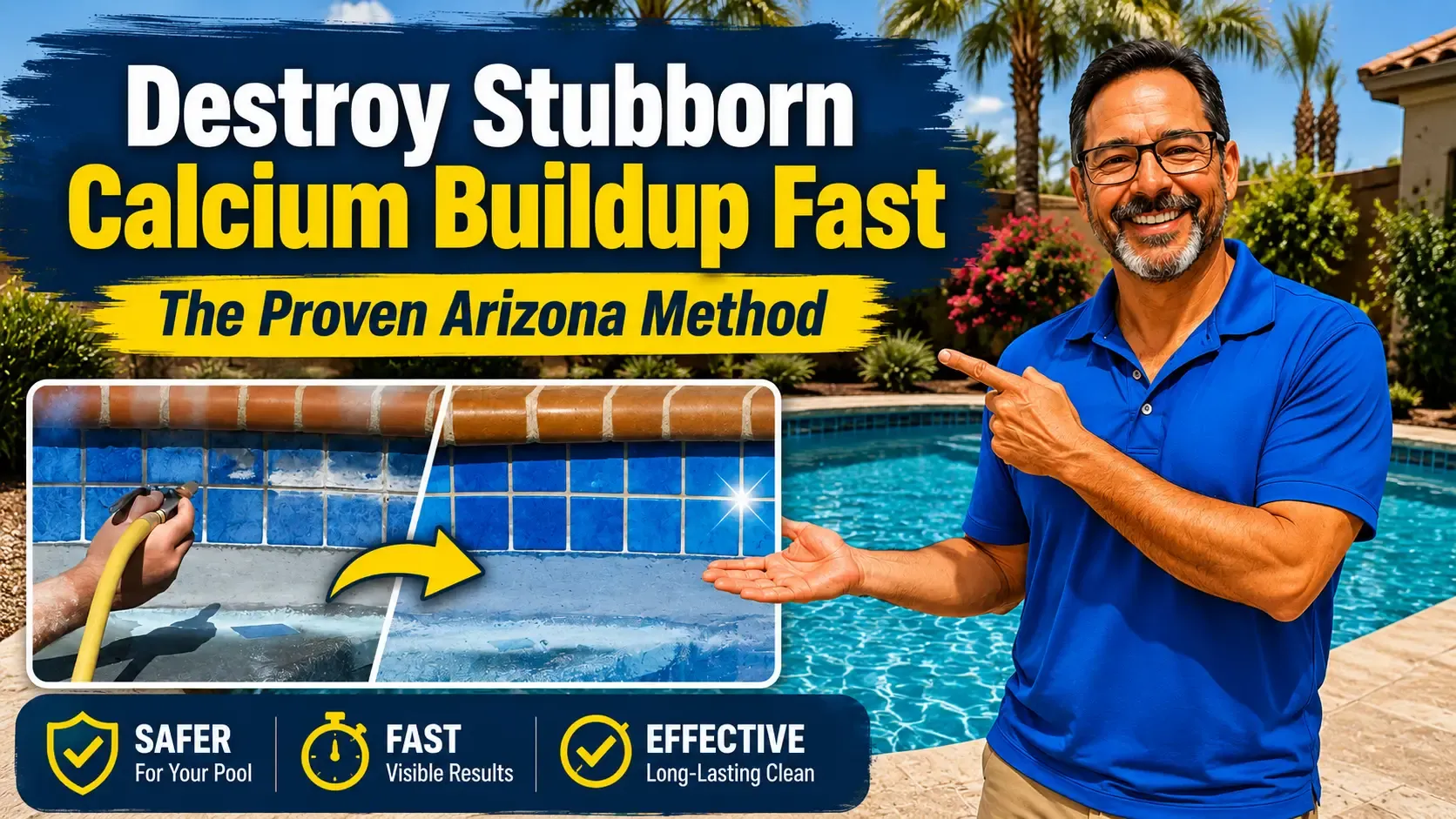
Arizona pool owners know the struggle: no matter how clean the water looks, the tile line eventually turns chalky white, crusty, and downright ugly. Whether you live in Phoenix, Chandler, Mesa, Gilbert, or Scottsdale, calcium scale is one of the most common and frustrating issues caused by our extremely hard water.
The good news? You can remove heavy calcium scale, restore your tile to a like‑new finish, and prevent future buildup with the right approach. This guide breaks down everything Arizona pool owners need to know — from why scale forms to the best professional cleaning methods and long‑term maintenance strategies.
Why Arizona Pools Get Heavy Calcium Scale
Arizona’s Hard Water Problem
Arizona has some of the hardest water in the country. As pool water evaporates — especially during our brutal summers — minerals like calcium and magnesium stay behind. Over time, they bond to the tile surface, forming thick white deposits.
Evaporation + Heat = Rapid Scaling
In Phoenix, Chandler, Mesa, Gilbert, and Scottsdale, evaporation rates are extremely high. The hotter the climate, the faster water evaporates, and the quicker scale forms.
High pH Levels Accelerate Buildup
When pH drifts high (a common issue in Arizona pools), calcium becomes more likely to precipitate out of the water and attach to tile surfaces.
Saltwater Pools Are Not Immune
Many homeowners assume saltwater pools prevent scaling — but they actually scale faster because salt increases evaporation.
What Heavy Calcium Scale Looks Like
Signs You Have Heavy Scale
- Thick white crust along the tile line
- Rough, sandpaper‑like texture
- Brown or yellow discoloration mixed with white
- Flaking or chipping deposits
- Tile that looks dull, faded, or stained
If you can scrape it with your fingernail and it feels hard and chalky, it’s calcium scale — and it won’t come off with normal brushing.
Why DIY Scrubbing Doesn’t Work
Many Arizona pool owners try:
- pumice stones
- vinegar
- CLR
- wire brushes
- magic erasers
These methods may remove light scale, but heavy calcium deposits are bonded tightly to the tile surface. Scrubbing often:
- damages the tile glaze
- scratches the tile
- removes grout
- creates uneven color patches
Heavy scale requires professional blasting, not household cleaners.

Professional Tile Cleaning Options in Arizona
Arizona pool professionals use two highly effective methods to remove heavy calcium scale:
Glass Bead Blasting
What It Is
Glass bead blasting uses ultra‑fine, round glass beads shot at low pressure to gently remove calcium without damaging the tile.
Why Arizona Homeowners Love It
- Safe for ceramic, porcelain, and glass tile
- Restores tile to a like‑new shine
- Removes thick calcium quickly
- Doesn’t scratch or dull the tile
- Works beautifully on waterline tile in Phoenix, Chandler, Mesa, Gilbert, and Scottsdale
Best For
- Ceramic tile
- Porcelain tile
- Glass tile
- Decorative mosaic tile
Results
After bead blasting, tile looks:
- clean
- glossy
- vibrant
- brand‑new
Soda Blasting
What It Is
Soda blasting uses sodium bicarbonate (baking soda) media to remove calcium scale. It’s slightly softer than glass bead blasting and ideal for delicate surfaces.
Why It’s Popular
- Gentle on softer tile
- Removes scale without scratching
- Eco‑friendly
- Great for older pools or fragile tile
Best For
- Stone tile
- Pebble surfaces
- Older tile that needs a softer touch
Results
Soda blasting leaves tile smooth, clean, and refreshed without harsh abrasion.
Which Method Should You Choose?
Glass Bead Blasting
Choose this if your pool has:
- ceramic tile
- porcelain tile
- glass tile
- decorative mosaics
Soda Blasting
Choose this if your pool has:
- stone tile
- older tile
- pebble surfaces
- softer materials
Most pools in Phoenix, Chandler, Mesa, Gilbert, and Scottsdale use ceramic or porcelain tile — making glass bead blasting the most common and effective choice.
How Long Does Tile Cleaning Take?
A typical Arizona pool tile cleaning takes:
- 1.5 to 3 hours for most residential pools
- Longer if the scale is extremely thick or the pool is oversized
Professionals drain the waterline slightly, blast the tile, rinse everything, and leave the pool looking dramatically better.
How Long Do Results Last?
With proper maintenance, your tile can stay clean for:
- 12 to 24 months
- Sometimes longer with consistent care
Because Arizona water is extremely hard, scale will eventually return — but you can slow it down significantly.
How To Prevent Calcium Scale From Returning
1. Keep pH Between 7.4 and 7.6
High pH is the #1 cause of scale. Test weekly.
2. Use a Tile Maintenance Cleaner
Regular use of a tile‑safe cleaner helps prevent early buildup.
3. Brush the Waterline Weekly
A soft brush keeps minerals from bonding to the tile.
4. Install a Pool Water Softener System
These systems reduce calcium hardness and dramatically slow scaling.
5. Maintain Proper Calcium Hardness
Ideal range: 200–400 ppm
6. Reduce Evaporation
Use a cover during extreme heat or when the pool is not in use.
7. Schedule Annual Tile Cleaning
Most Arizona homeowners benefit from yearly professional blasting.
Why Professional Tile Cleaning Is Worth It
Instant Results
Your tile looks new again the same day.
Protects Your Investment
Clean tile improves:
- pool appearance
- home value
- water chemistry stability
Safe for Tile
Professionals use the correct media for your tile type.
Affordable
Tile cleaning is one of the most cost‑effective pool services in Arizona.
Final Thoughts
If you live in Phoenix, Chandler, Mesa, Gilbert, or Scottsdale, heavy calcium scale is unavoidable — but it’s absolutely fixable. With professional bead blasting or soda blasting, your tile can look brand‑new again, and with proper maintenance, you can keep it clean much longer.
Arizona’s hard water may be tough, but your pool tile doesn’t have to suffer.