Saltwater vs Chlorine Pools – The Real Pros and Cons in Phoenix, AZ
Phoenix’s extreme heat, UV intensity, and monsoon dust storms make pool sanitation a unique challenge. Here’s the real breakdown of saltwater vs chlorine pools in Arizona… Read More>>>

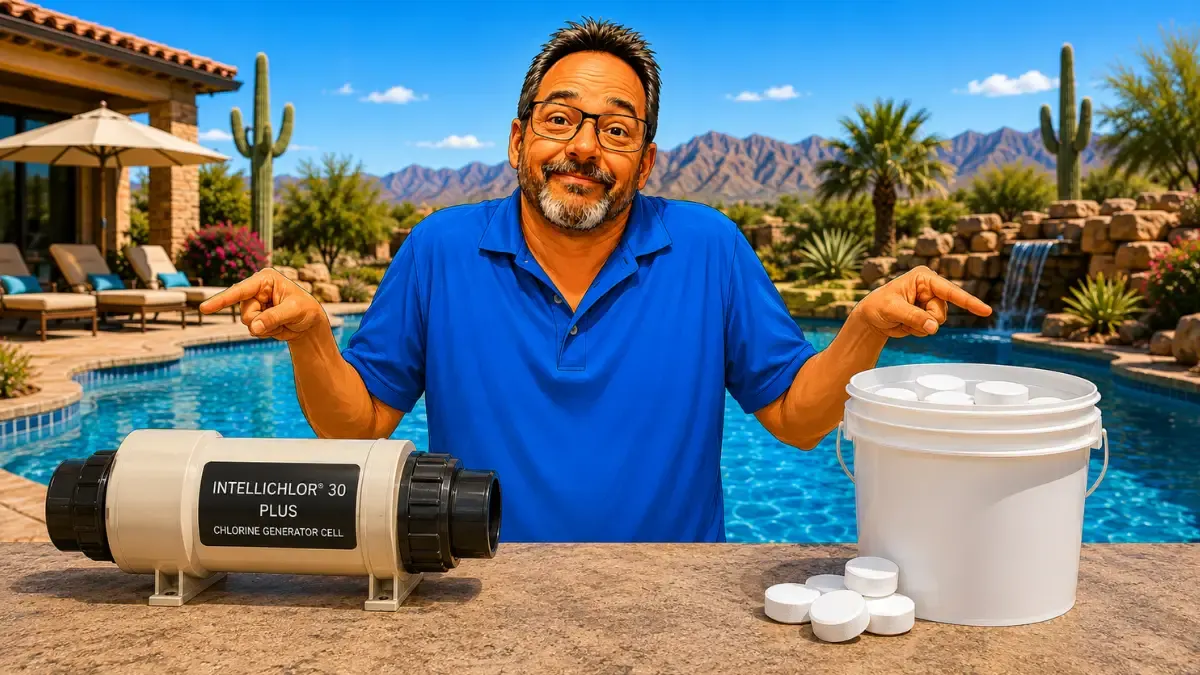
Saltwater vs Chlorine Pools in Phoenix, AZ — What Arizona Homeowners Really Need to Know
If you own a pool in Phoenix, Chandler, Gilbert, Scottsdale, or anywhere in the Valley, you already know your pool works harder than pools in other states. With 115°F summers, intense UV exposure, monsoon dust, and year‑round swimming, your sanitation system isn’t just a preference—it’s a survival tool.
The saltwater vs chlorine debate is one of the most common questions Arizona pool owners ask. Both systems can work beautifully in the desert, but each comes with real‑world pros and cons that matter specifically in Phoenix’s climate.
This guide breaks down everything you need to know—costs, maintenance, lifespan, comfort, and long‑term performance—so you can choose the best system for your Arizona pool.
How Each System Works
How a Chlorine Pool Works
Traditional chlorine pools rely on:
- Liquid chlorine
- Chlorine tablets
- Occasional shock treatments
Chlorine is added manually or through an automatic chlorinator. It sanitizes quickly and is easy to adjust, which is helpful during monsoon season or heavy swim weeks.
How a Saltwater Pool Works
Saltwater pools use a salt chlorine generator (SCG). The system converts dissolved salt into chlorine through electrolysis. You still have chlorine—but it’s produced automatically and more consistently.
Saltwater pools are not chlorine‑free; they’re simply self‑chlorinating.
Pros and Cons of Saltwater Pools in Phoenix, AZ
Saltwater Pool Advantages
1. Softer, More Comfortable Water
Saltwater pools feel smoother on skin and eyes—especially important in Phoenix where swimmers spend long hours in the pool.
2. Lower Day‑to‑Day Maintenance
The system generates chlorine automatically, reducing:
- Weekly chemical adjustments
- Frequent trips to the pool store
- Manual dosing
This is a major benefit during long Arizona summers when chlorine demand skyrockets.
3. More Stable Chlorine Levels
Salt systems produce chlorine slowly and consistently, helping prevent:
- Algae blooms
- Cloudy water
- Strong chlorine smell
This stability is valuable during monsoon season when debris and dust constantly enter the pool.
4. Fewer Harsh Chemical Interactions
Saltwater is gentler on:
- Skin
- Hair
- Swimsuits
- Eyes
Families with kids or sensitive skin often prefer saltwater.
Saltwater Pool Disadvantages
1. Higher Upfront Cost
Saltwater conversion in Phoenix typically costs:
- $1,800–$3,200 for equipment and installation
- $300–$600 for electrical upgrades (if needed)
2. Salt Can Be Corrosive in Desert Conditions
Saltwater can accelerate corrosion on:
- Metal pool equipment
- Stone surfaces
- Waterline tile grout
- Natural stone coping (travertine, flagstone)
Phoenix’s dry heat intensifies evaporation, leaving salt residue behind.
3. Salt Cells Wear Out Faster in Arizona
High water temperatures (90–95°F in summer) shorten salt cell lifespan. Expect replacement every:
- 3–5 years in Phoenix
- Cost: $600–$1,200
4. Not Ideal for Every Pool Surface
Saltwater is safe for:
- Pebble Surfaces
- Quartz Surfaces
- High‑quality plaster
But it can damage:
- Soft stone
- Low‑quality plaster
- Older pools with metal fixtures
Pros and Cons of Chlorine Pools in Phoenix, AZ
Chlorine Pool Advantages
1. Lower Upfront Cost
A traditional chlorine system is significantly cheaper:
- $200–$600 for a chlorinator
- No electrical upgrades
- No salt cell replacement
2. Faster Response to Monsoon Contamination
Chlorine pools allow quick adjustments when:
- Dust storms hit
- Debris blows in
- Algae starts forming
You can shock the pool immediately without waiting for a salt system to catch up.
3. Works Well With All Pool Surfaces
Chlorine is safe for:
- Pebble
- Plaster
- Vinyl
- Fiberglass
- Natural stone
No corrosion concerns from salt.
4. Lower Repair Costs
Chlorine systems have fewer expensive components. Repairs are simple and inexpensive.
Chlorine Pool Disadvantages
1. Higher Ongoing Chemical Costs
Phoenix pools burn through chlorine fast due to:
- UV exposure
- High water temps
- Heavy swim use
Expect to spend:
- $400–$800 per year on chlorine
2. More Frequent Maintenance
You’ll need to:
- Test water more often
- Add chlorine manually
- Shock regularly
- Manage pH swings
3. Stronger Chemical Smell
Chloramines (combined chlorine) can create:
- Harsh odors
- Eye irritation
- Skin dryness
4. More Fluctuation in Water Quality
Chlorine levels can drop quickly in Phoenix heat, leading to:
- Cloudy water
- Algae blooms
- Irritation
Cost Comparison for Phoenix Pool Owners
Upfront Costs
| System | Cost |
|---|---|
| Saltwater Conversion | $1,800–$3,200 |
| Salt Cell Replacement | $600–$1,200 every 3–5 years |
| Traditional Chlorine Setup | $200–$600 |
Annual Maintenance Costs
| System | Annual Cost |
|---|---|
| Saltwater | $150–$300 |
| Chlorine | $400–$800 |
Saltwater saves money long‑term, but only if your pool surface and equipment are compatible.
Which System Performs Better in Phoenix’s Climate?
Saltwater Performs Best If…
- You want low‑maintenance pool care
- You swim frequently
- You have a Pebble surface or Quartz surface
- You want softer, more comfortable water
- You’re okay with higher upfront cost
Chlorine Performs Best If…
- You want the lowest upfront cost
- You have natural stone or older plaster
- You want fast response during monsoon season
- You prefer simple, inexpensive repairs
- You don’t mind weekly chemical adjustments
The Verdict — Saltwater vs Chlorine in Phoenix
There’s no universal “best” system. The right choice depends on your pool’s surface, your budget, and how much maintenance you want to handle.
Saltwater is ideal for comfort and convenience.
Chlorine is ideal for durability and lower upfront cost.
If you’re building a new pool or resurfacing with Pebble, saltwater is an excellent long‑term choice. If you have natural stone, older plaster, or want the simplest system possible, chlorine is the safer option.
Final Recommendation for Arizona Pool Owners
If you want:
- Lower long‑term cost
- Softer water
- Less weekly maintenance
→ Choose saltwater, but only if your pool surface is compatible.
If you want:
- Lowest upfront cost
- Fastest monsoon recovery
- No risk of salt corrosion
→ Stick with chlorine.
Either system can thrive in Phoenix—what matters is choosing the one that fits your pool’s materials and your lifestyle.
Get a Professional Pool Checkup Before You Spend a Dollar
Get pool peace‑of‑mind without spending a dime. I offer a free, no‑pressure evaluation of your pool equipment or pool surface so you know exactly what’s working, what needs attention, and what upgrades can elevate your backyard. Whether you’re considering equipment replacement, a full remodel, or adding new water features, I’ll walk you through your best options and help you plan the perfect upgrade. Call me today at 480‑645‑1622 and schedule a time that’s convenient for you.