Why Is My Pool Water Green? How to Fix Algae Problems Fast
Green pool water is one of the most common problems pool owners face, and the good news is it's completely fixable. Understanding why it happens is the first step toward getting your water back to crystal clear.

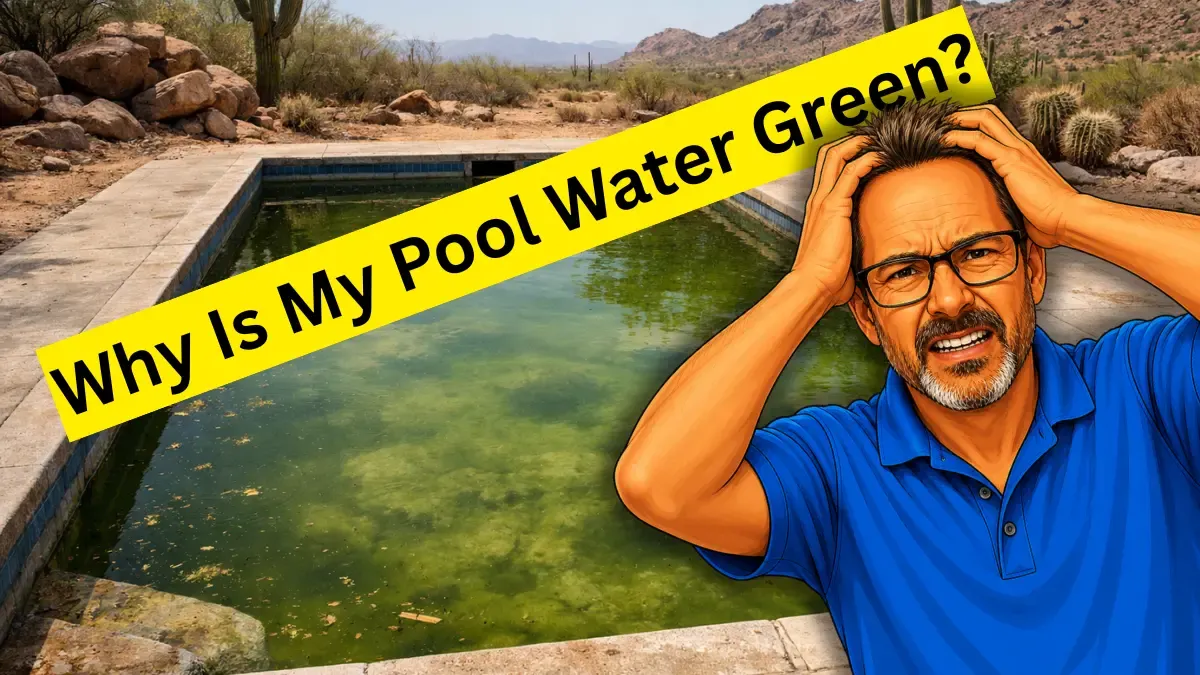
Why Did Your Pool Turn Green?
You woke up, walked outside, and your once-sparkling blue pool now looks like a pond from a swamp. It's a jarring sight — but you're not alone. Green pool water is one of the most common problems pool owners face, and the good news is it's completely fixable. Understanding why it happens is the first step toward getting your water back to crystal clear.
The culprit is almost always algae — microscopic plant-like organisms that thrive when pool chemistry falls out of balance. The three primary triggers are: a drop in free chlorine levels below the effective sanitizing threshold (1–3 ppm), poor water circulation from a pump that isn't running long enough, and high phosphate levels that act as a fertilizer for algae growth. Warm temperatures and direct sunlight accelerate the process dramatically.
Diagnosing the Severity: How Bad Is Your Algae Problem?
Not all green pools are equal. Gauging the severity of your algae bloom helps you choose the right treatment approach.
Light Green Water
Light green or teal water typically indicates an early-stage bloom. You can still see the pool bottom, and the problem hasn't fully taken hold. This is the easiest stage to treat and usually requires one round of shock treatment.
Dark Green or Murky Water
Dark green water where visibility to the bottom is lost signals a more established algae colony. You'll need aggressive treatment: double or even triple-dose shock, algaecide, and multiple rounds of backwashing your filter.
Black or Dark Spots
Black algae is the most stubborn variety. It appears as dark, slimy spots typically clinging to pool walls and floors, often in shaded areas. It has a protective outer layer that makes it resistant to standard chlorine levels and requires targeted brushing and repeated treatment to fully eliminate.
Step-by-Step: How to Fix a Green Pool
Step 1: Test Your Water
Before adding any chemicals, test your pool water with a reliable test kit or test strips to determine your current free chlorine, pH, total alkalinity, and phosphate levels. Adjust pH to the 7.2–7.6 range first — chlorine works most effectively at this pH level.
Step 2: Shock the Pool
Pool shock (calcium hypochlorite) is your primary weapon against algae. For a light green pool, use 1 pound of shock per 10,000 gallons. For dark green water, use 2–3 pounds per 10,000 gallons. Always add shock in the evening to prevent UV degradation, and pre-dissolve it in a bucket of water before pouring it around the pool's perimeter.
Step 3: Apply Algaecide
After shocking, apply a quality algaecide according to the label directions. Choose a polyquat algaecide (not quat-based) to avoid creating foam. Algaecide works in tandem with chlorine to kill remaining algae and prevent regrowth.
Step 4: Brush the Pool Walls and Floor
Use a stiff pool brush to scrub every surface — walls, steps, floor, and behind the ladder. This breaks up algae colonies and forces them into the water column where your chlorine and filter can eliminate them. For black algae, use a wire brush and be persistent.
Step 5: Run the Filter Continuously
Run your pool filter 24 hours a day until the water clears. Your filter is responsible for physically removing dead algae from the water. Cartridge and DE filters will need to be cleaned; sand filters should be backwashed every 24 hours or when pressure rises 8–10 psi above normal.
Step 6: Vacuum and Backwash
Once algae have been killed (they'll turn gray or white), vacuum the pool to waste — bypassing your filter entirely to avoid recirculating dead algae. Backwash your sand filter thoroughly after vacuuming.
Preventing Algae From Returning
Maintain Proper Chlorine Levels
Keep free chlorine between 1–3 ppm at all times. Test your water at least twice a week, and more frequently in summer. Use a chlorine stabilizer (cyanuric acid) at 30–50 ppm to protect chlorine from UV degradation.
Test Regularly and Balance Chemistry
Chemical imbalances — especially high phosphates, low chlorine, or a drifting pH — create conditions where algae thrive. Test your water twice a week during swimming season and after every heavy rain or large pool party.
Weekly Brushing Is Non-Negotiable
Even if your water looks clear, brush your pool walls and floor weekly. Algae spores can cling to surfaces and begin colonizing long before the water turns green.
|
Arizona Pool Owner Tip: In the Phoenix metro area —
including Chandler, Scottsdale, Gilbert, and Mesa — summer temperatures
routinely exceed 110°F. This intense heat causes chlorine to dissipate
rapidly, sometimes within hours. Arizona pools are among the most vulnerable
to sudden algae blooms in the entire country. Test your water at least
three times per week during June, July, and August, and consider using a
chlorine stabilizer to protect your sanitizer from the relentless desert sun. |
Getting on top of algae quickly saves you time, money, and frustration. With the right combination of shock treatment, algaecide, brushing, and consistent chemistry maintenance, you can restore your pool to sparkling clarity — and keep it that way all season long.
Get a Professional Pool Checkup Before You Spend a Dollar
Get pool peace‑of‑mind without spending a dime. I offer a free, no‑pressure evaluation of your pool equipment or pool surface so you know exactly what’s working, what needs attention, and what upgrades can elevate your backyard. Whether you’re considering equipment replacement, a full remodel, or adding new water features, I’ll walk you through your best options and help you plan the perfect upgrade. Call me today at 480‑645‑1622 and schedule a time that’s convenient for you.