Why Your Pool Pump Is Running Loud — And What It Means (Phoenix 2026 Guide)
A loud pool pump isn’t just annoying. It’s your equipment telling you something is wrong. Catching the noise early can save you hundreds (sometimes thousands) in repairs or replacements.

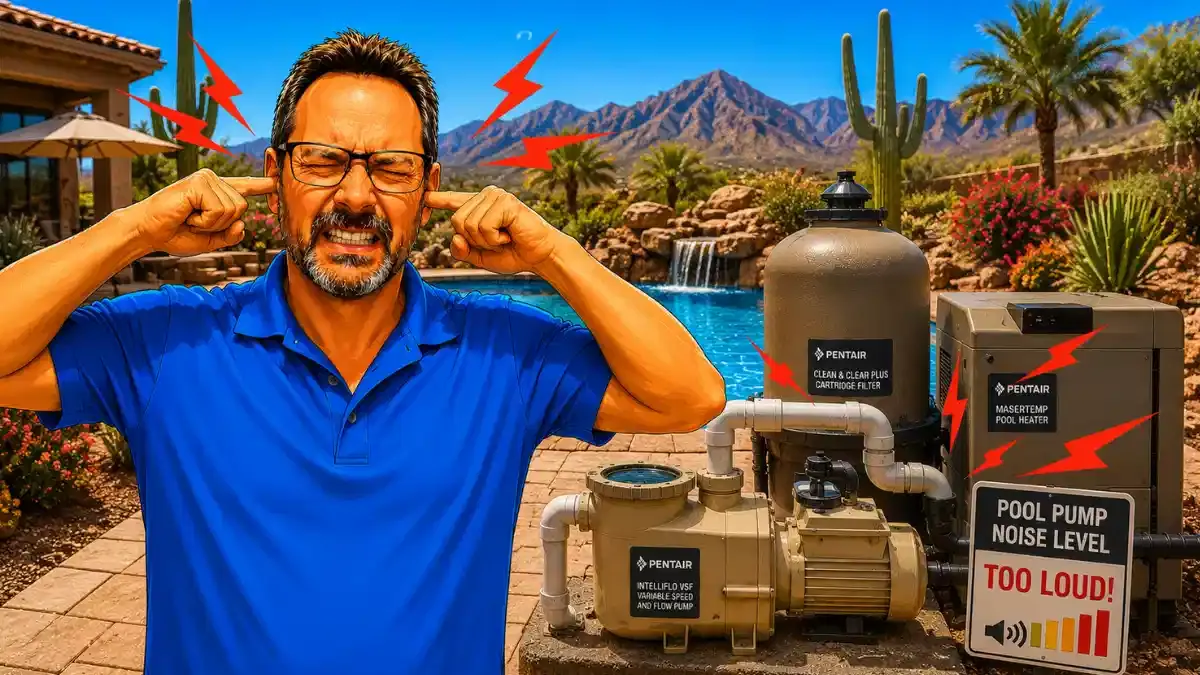
If your pool pump has suddenly started running louder than usual, you’re not alone. Phoenix and East Valley pool owners deal with some of the harshest pool‑equipment conditions in the country. Extreme heat, monsoon dust, hard water, and long filtration cycles all take a toll on pumps — and noise is almost always the first warning sign.
A loud pool pump isn’t just annoying. It’s your equipment telling you something is wrong. Catching the noise early can save you hundreds (sometimes thousands) in repairs or replacements.
Below is a complete Phoenix‑specific guide to understanding loud pool pumps, what each noise means, and what to do next.
Why Pool Pumps Get Loud in Phoenix
Phoenix is uniquely hard on pool equipment. Even a brand‑new pump can start making noise faster here than in other states. Here’s why:
Extreme Heat
Summer temperatures regularly hit 110–118°F. This heat:
- Breaks down motor bearings
- Weakens capacitors
- Dries out O‑rings
- Causes motors to overheat
Heat alone shortens pump lifespan by years.
Monsoon Dust
Fine desert dust gets into:
- Skimmer baskets
- Pump baskets
- Impellers
- Motor housings
Dust is one of the biggest causes of grinding and screeching noises.
Hard Water
Phoenix water is extremely hard. Calcium builds up inside:
- Impellers
- Pump lids
- Seals
- Plumbing
This buildup restricts flow and causes cavitation noise.
Long Run Times
Most Phoenix pools run 8–12 hours a day in summer. More run time = more wear.
The 6 Most Common Loud Pump Noises (and What They Mean)
Each noise tells a different story. Here’s how to decode them.
1. Loud Humming Noise
Most Likely Cause — Failing Start Capacitor
A deep, steady humming sound usually means the start capacitor is failing. This is extremely common in Phoenix because capacitors sit in direct heat and run long cycles.
What’s happening: The motor is trying to start but doesn’t have enough power.
Why it matters: If you keep running it, the motor can burn out.
What to do: Turn the pump off and replace the capacitor. It’s a cheap fix — much cheaper than a new motor.
2. High‑Pitched Screeching or Whining
Most Likely Cause — Bad Motor Bearings
This is one of the most common noises in Arizona pools.
Phoenix heat + dust = bearing failure.
What it sounds like: A sharp, metallic screech or whine.
What it means: Your motor bearings are failing. Once bearings go bad, they don’t recover.
What to do: You can replace the bearings, but most homeowners replace the motor because the cost difference is small and the repair is labor‑heavy.
3. Grinding or Growling Noise
Most Likely Cause — Clogged Impeller or Internal Motor Damage
If your pump sounds like it’s chewing rocks, you may have:
- A clogged impeller
- A piece of debris stuck inside
- Internal motor damage
Monsoon storms blow debris into skimmers, which often leads to impeller blockages.
What it means: Your pump is struggling to move water.
What to do: Turn it off immediately. Running it like this can:
- Burn out the motor
- Crack the pump housing
- Overheat the system
This is a “don’t wait” situation.
4. Rattling or Vibrating Noise
Most Likely Cause — Loose Bolts or Uneven Equipment Pad
Older Phoenix homes often have equipment pads that:
- Crack
- Settle
- Tilt
- Crumble
When the pump isn’t level, it vibrates loudly.
What it means: Your pump is shaking against the pad or the bolts are loose.
What to do: Check:
- Mounting bolts
- Pump feet
- The pad itself
If the pad is deteriorating, it may need to be replaced.
5. Cavitation — Loud, Hollow, “Sucking Air” Sound
Most Likely Cause — Low Water Flow
Cavitation happens when the pump isn’t getting enough water. In Phoenix, this often happens because:
- Water level dropped from evaporation
- Skimmer basket is clogged
- Pump lid O‑ring is cracked
- Suction lines are partially blocked
What it means: Your pump is pulling air instead of water.
What to do: Check:
- Water level (should be halfway up the skimmer)
- Skimmer and pump baskets
- Pump lid O‑ring
If the noise continues, you may have a suction leak.
6. Your Pump Is Just Old
Most Likely Cause — End of Life
Arizona heat ages pumps faster than almost anywhere else.
A pump that lasts 12–15 years in other states often lasts 7–10 years in Phoenix.
If your pump is older and getting louder every month, it may simply be reaching the end of its life.
When to Worry (Quick Rule of Thumb)
If the noise is:
- New
- Getting worse
- High‑pitched
- Grinding
- Causing vibration
…it’s time to take action.
A loud pump almost always means something is wearing out.
How to Prevent Loud Pumps in Phoenix
Keep the Pump Shaded
Direct sun destroys motors and capacitors.
Clean Baskets Weekly
Especially during summer and monsoon season.
Replace the Pump Lid O‑Ring Yearly
Heat dries them out.
Rinse Equipment After Dust Storms
Dust buildup is a silent killer.
Don’t Run the Pump Dry
Even a few minutes can cause cavitation damage.
Consider Upgrading to a Variable‑Speed Pump
Pentair VS pumps run cooler, quieter, and last longer in Phoenix.
Final Thoughts
A loud pool pump is your equipment asking for help. Catching the noise early can save you from a full motor replacement — or worse, a complete pump failure in the middle of a Phoenix summer.
Use the noise as a clue. It’s almost always telling you exactly what’s wrong.
Get a Professional Pool Checkup Before You Spend a Dollar
Get pool peace‑of‑mind without spending a dime. I offer a free, no‑pressure evaluation of your pool equipment or pool surface so you know exactly what’s working, what needs attention, and what upgrades can elevate your backyard. Whether you’re considering equipment replacement, a full remodel, or adding new water features, I’ll walk you through your best options and help you plan the perfect upgrade. Call me today at 480‑645‑1622 and schedule a time that’s convenient for you.