Phoenix Pool Losing Water? Evaporation vs Leak Explained
Phoenix pools lose water fast in Arizona’s heat — but how do you know if it’s normal evaporation or a real leak? Learn the signs, the bucket test, and what Phoenix homeowners should check first before calling a pro. Read More…


Phoenix pool owners deal with some of the harshest conditions in the country. Extreme heat, low humidity, intense UV exposure, and monsoon winds all combine to pull water out of your pool at a rapid rate. But when your waterline drops, the big question becomes: Is this normal evaporation… or do I have a leak?
Understanding the difference can save you thousands of gallons of water, prevent structural damage, and help you avoid unnecessary repairs. Let’s break it down clearly and simply.
How Much Water Loss Is Normal in Phoenix?
Evaporation Rates in Arizona
Phoenix evaporation is no joke. During peak summer:
- ½ to 1 inch per day is normal
- Up to 2 inches per day during extreme heat waves
- Windy monsoon days can increase evaporation by 30–50%
- Low humidity accelerates water loss even more
If your pool is losing water within these ranges, evaporation is the likely cause.
Why Phoenix Pools Evaporate Faster
Arizona’s climate creates the perfect recipe for water loss:
- High temperatures (105–118°F)
- Very low humidity
- Constant sunlight exposure
- Wind pulling moisture off the surface
- Warm pool water releasing vapor
Your pool is essentially a giant swamp cooler.
Signs Your Pool Is Losing Water from Evaporation
1. Water Loss Is Consistent Day to Day
Evaporation is steady. If you lose roughly the same amount daily, it’s likely normal.
2. Loss Increases During Heat Waves
If water drops faster during hotter weeks, that’s evaporation.
3. No Wet Spots Around the Pool
Leaks usually create soggy soil, wet deck areas, or soft spots.
4. No Air in the Pump Basket
Plumbing leaks often pull air into the system.
Signs Your Pool Has a Leak
1. Water Loss Is More Than 1–2 Inches Per Day
Anything above this is suspicious.
2. Wet or Soft Areas Around the Pool
Check:
- Behind the equipment pad
- Around the skimmer
- Near return jets
- Along the pool’s outer perimeter
3. Air Bubbles in the Pump
This often indicates a suction‑side leak.
4. Cracks in the Pool Shell
Even hairline cracks can leak thousands of gallons.
5. Water Loss Stops Below a Certain Level
If the pool stops draining at a specific height, the leak is at that level — often the skimmer or return line.
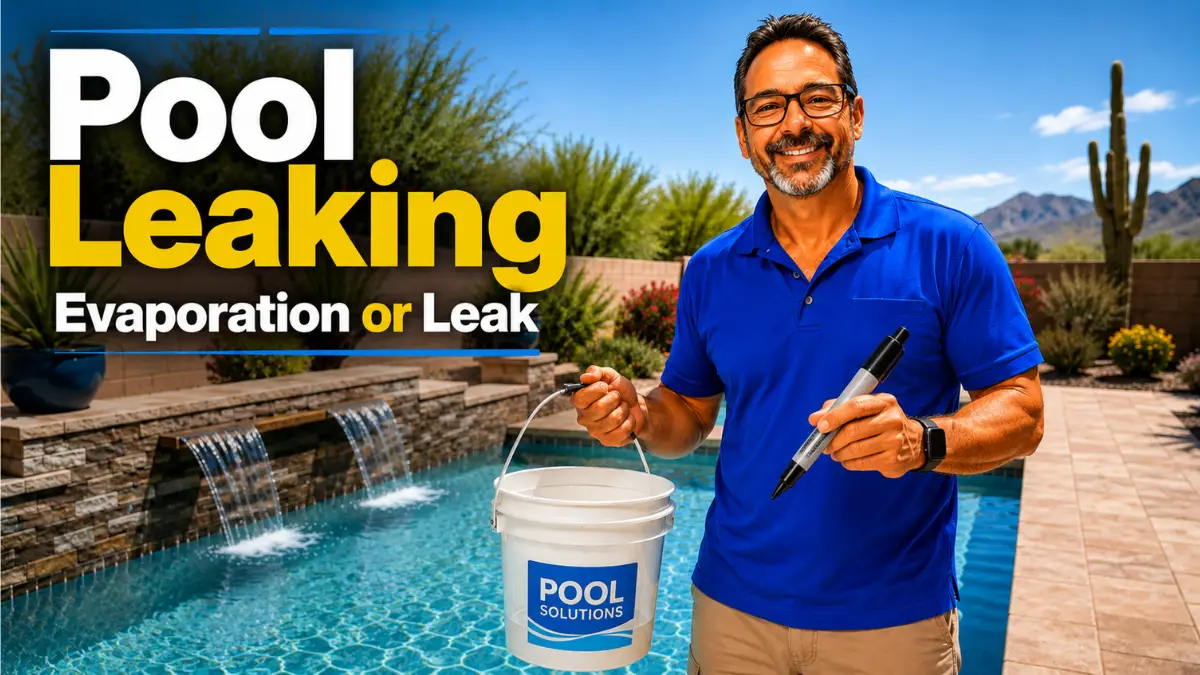
The Bucket Test: The #1 Way to Diagnose Water Loss
The bucket test is simple, accurate, and takes less than 24 hours.
How to Perform the Bucket Test
- Fill a bucket with pool water.
- Place it on the top step so water temperature matches.
- Mark the water level inside the bucket.
- Mark the pool water level outside the bucket.
- Wait 24 hours.
- Compare the two marks.
Interpreting Results
- Both levels drop equally: Evaporation
- Pool drops more than bucket: Leak
- Bucket barely drops but pool drops fast: Major leak
This test eliminates guesswork.
Common Leak Locations in Phoenix Pools
1. Skimmer Cracks
Arizona’s shifting soil and heat expansion often crack skimmer throats.
2. Return Line Fittings
UV exposure weakens fittings over time.
3. Main Drain Plumbing
Older pools frequently develop underground leaks.
4. Tile Line Cracks
Monsoon movement and heat expansion cause tile separation.
5. Light Niches
A very common leak point in older plaster pools.
How Monsoon Season Affects Water Loss
Monsoon storms create:
- Strong winds
- Rapid humidity changes
- Pressure fluctuations
- Soil movement
- Deck shifting
Wind dramatically increases evaporation, while soil movement can worsen existing leaks.
How to Reduce Evaporation in Phoenix
1. Use a Solar Cover
Reduces evaporation by 70–90%.
2. Add Shade
Pergolas, umbrellas, or shade sails help significantly.
3. Lower Water Temperature
Running your pump at night cools the water.
4. Reduce Water Features
Sheer descents, fountains, and spillways increase evaporation.
When to Call a Leak Detection Pro
If your bucket test shows a leak or you see signs of water loss beyond evaporation, it’s time to call a professional. Leak detection specialists use:
- Pressure testing
- Dye testing
- Acoustic listening equipment
- Camera scopes
Catching leaks early prevents:
- Deck damage
- Soil erosion
- Equipment failure
- Higher water bills
Final Thoughts
Phoenix pools lose water — that’s unavoidable. But knowing the difference between evaporation and a leak empowers you to act quickly, save money, and protect your investment. Run the bucket test, monitor your waterline, and stay ahead of Arizona’s extreme climate.
If your pool is dropping water faster than expected, don’t ignore it. A small leak today can become a major repair tomorrow.