Phoenix Pool Water Testing: Choosing the Best Test Kit for AZ
Phoenix’s extreme heat makes accurate pool water testing essential. Learn which test kits work best in Arizona and how to use them correctly for clear, safe water all year. Covers Phoenix, Chandler, Mesa, Gilbert, and Scottsdale. Read More…

Phoenix pool owners deal with some of the harshest water chemistry conditions in the country. Extreme heat, high UV exposure, hard water, and rapid evaporation all impact your pool’s chemical balance. That’s why accurate water testing isn’t optional — it’s the foundation of a healthy, clear, and safe swimming pool.
Whether you live in Phoenix, Chandler, Mesa, Gilbert, or Scottsdale, choosing the right pool test kit makes maintaining your water dramatically easier. This guide breaks down the different types of pool test kits, how they work, and which ones perform best in Arizona’s climate.
Why Water Testing Matters More in Phoenix, AZ
Phoenix’s desert environment creates unique challenges:
- Extreme UV exposure burns off chlorine faster
- High evaporation rates concentrate minerals and raise calcium hardness
- Hard water increases scaling risk
- Summer heat accelerates algae growth
- Dust storms (haboobs) introduce contaminants
Because of this, Phoenix‑area pool owners should test water more frequently than the national average:
- Chlorine & pH: 2–3 times per week
- Alkalinity: Weekly
- Calcium hardness & CYA: Monthly
- Salt (for salt pools): Monthly
The right test kit ensures you’re getting accurate readings — even in 115°F heat.
The Main Types of Pool Water Test Kits
1. Test Strips
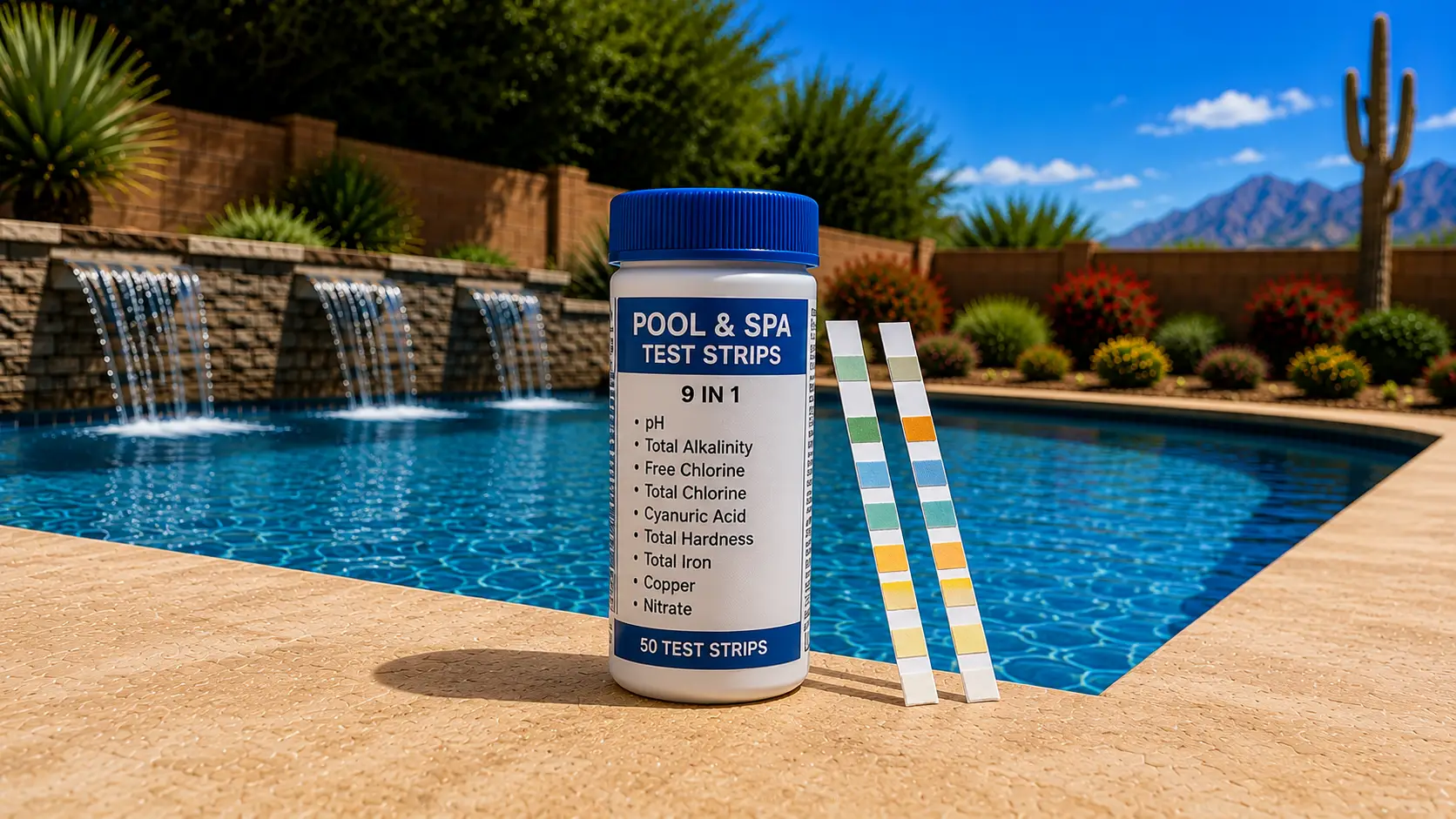
Test strips are the quickest and easiest way to test pool water. You simply dip the strip, wait a few seconds, and compare the colors to the chart.
Pros
- Fast and simple
- Inexpensive
- Great for quick checks
Cons
- Least accurate
- Colors can fade in Phoenix heat
- Harder to read for precise adjustments
Best Use in Phoenix
Test strips are ideal for daily quick checks, especially for chlorine and pH. However, they shouldn’t be your only testing method in Arizona’s climate.
2. Liquid Reagent Test Kits (Drop Kits)
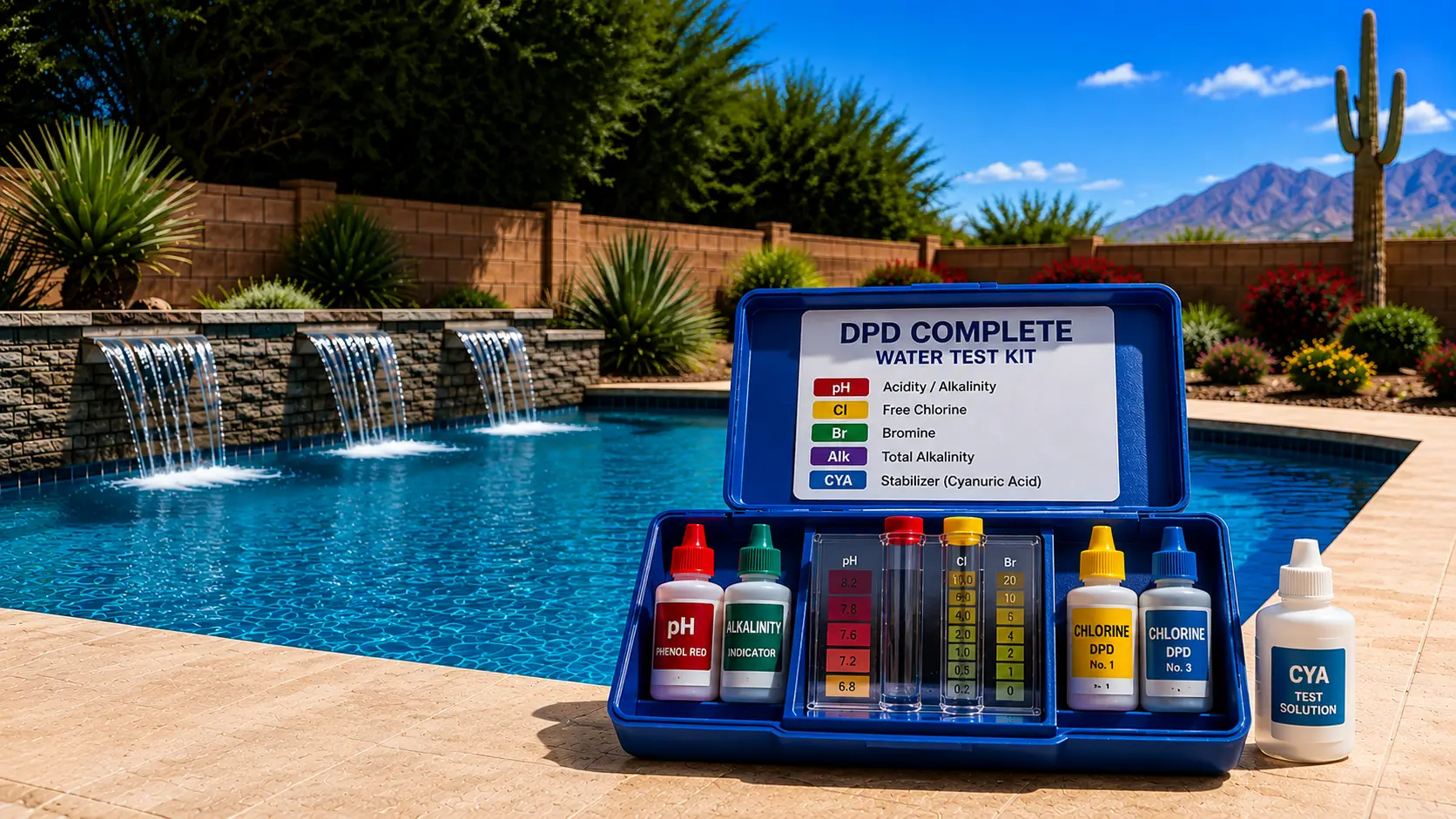
Liquid reagent kits use drops and color‑matching to measure chemical levels. These are far more accurate than strips.
Pros
- High accuracy
- Reliable in extreme heat
- Measures multiple parameters
Cons
- Requires more steps
- Color matching can be subjective
Best Use in Phoenix
Drop kits are the standard choice for Arizona pool owners. They handle heat well and provide consistent results for chlorine, pH, alkalinity, and more.
3. Digital Pool Testers
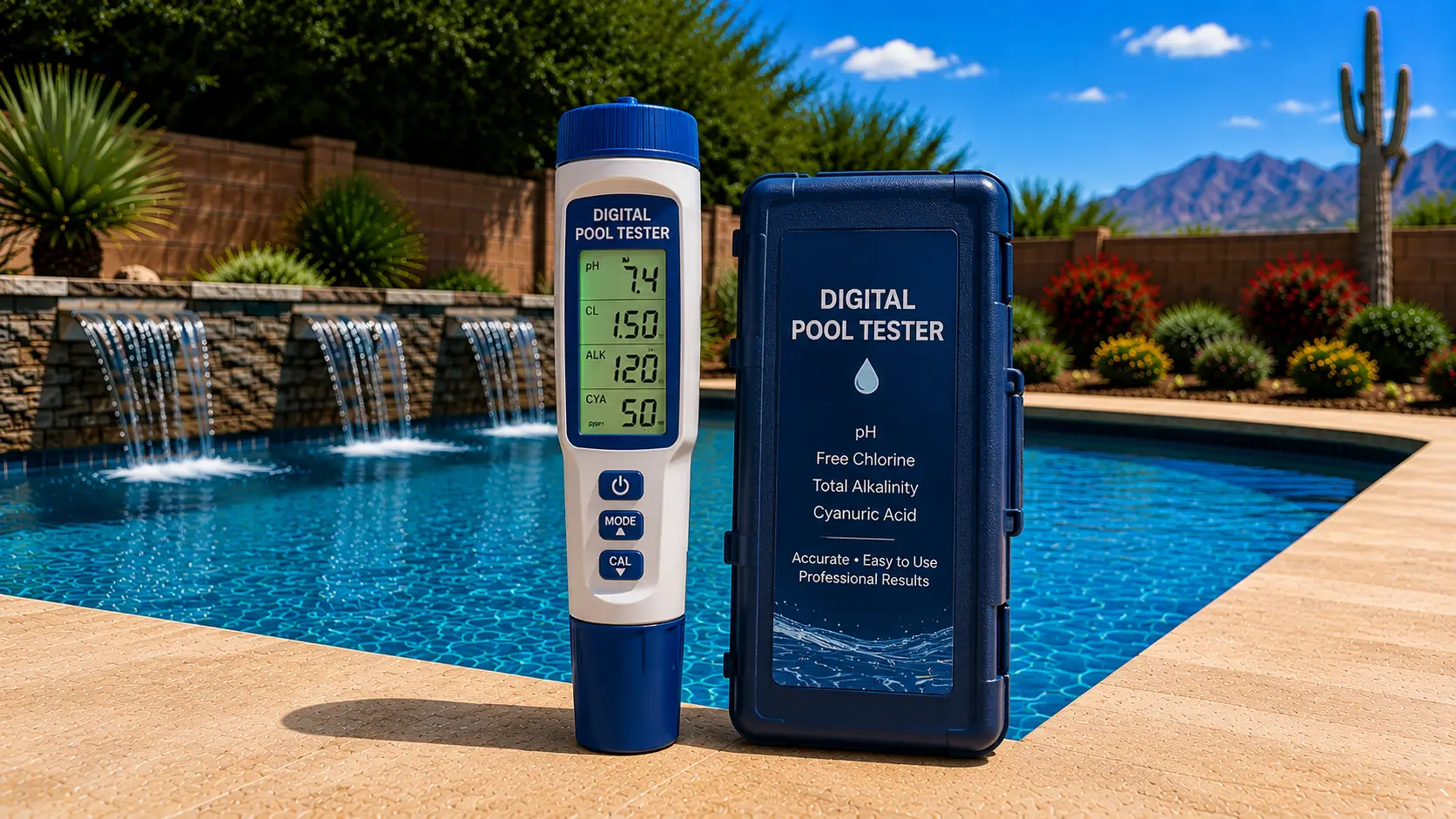
Digital testers use sensors or photometers to give exact numerical readings.
Pros
- Extremely accurate
- No color matching
- Great for hard‑to‑read parameters
Cons
- More expensive
- Sensors require calibration
- Not all models handle AZ heat well
Best Use in Phoenix
Digital testers are excellent for pool owners who want professional‑level accuracy, especially for salt levels, phosphates, or precise pH readings.
4. Professional Lab Testing
Some pool stores offer in‑store water testing using digital photometers.
Pros
- Very accurate
- Full chemistry panel
- Great for troubleshooting
Cons
- Requires travel
- Results vary by store
- Not ideal for weekly testing
Best Use in Phoenix
Use professional testing monthly or whenever you’re dealing with persistent issues like algae, scaling, or cloudy water.
Which Test Kit Is Best for Phoenix, AZ?
Because of the heat and hard water, Phoenix pool owners benefit most from a two‑kit system:
Best Overall Setup
- Liquid reagent test kit for weekly testing
- Digital tester for salt, pH, or specialty readings
- Test strips for quick daily checks
This combination gives you speed, accuracy, and reliability.
How to Use Each Test Kit Correctly
Using Test Strips
- Dip the strip 12–18 inches below the surface
- Hold still for 2 seconds
- Remove and wait 15 seconds
- Compare colors immediately
- Store strips indoors (Phoenix heat destroys them)
Tip: Replace strips every 30 days — they degrade fast in Arizona.
Using Liquid Reagent Kits
- Rinse the test vial with pool water
- Fill to the marked line
- Add the correct number of drops
- Cap and gently invert (don’t shake)
- Compare the color to the chart
- Record your results
Tip: Keep reagents indoors. Heat causes them to expire early.
Using Digital Testers
- Rinse the sensor
- Submerge to the recommended depth
- Wait for the reading to stabilize
- Rinse and store the device properly
- Calibrate monthly
Tip: Never leave digital testers outside — sensors fail quickly in Phoenix summers.
City‑Specific Notes for Phoenix, Chandler, Mesa, Gilbert & Scottsdale
Phoenix
- Highest UV exposure
- Chlorine burns off fastest
- Test chlorine more frequently
Chandler
- Hard water hotspots
- Calcium hardness rises quickly
- Test CH monthly
Mesa
- Larger number of older pools
- Filters may require more frequent checks
- Test alkalinity weekly
Gilbert
- Rapid growth + new plaster pools
- New plaster affects pH stability
- Test pH 3x per week
Scottsdale
- Luxury pools with water features
- Higher aeration = pH rises faster
- Test pH and alkalinity more often
Final Recommendations for Arizona Pool Owners
- Use test strips daily
- Use a liquid reagent kit weekly
- Use a digital tester monthly
- Store all kits indoors
- Replace reagents yearly
- Test more often during monsoon season
Accurate testing is the foundation of a clean, safe, and beautiful pool — especially in Phoenix’s extreme climate.